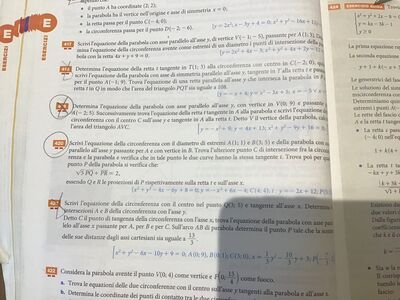


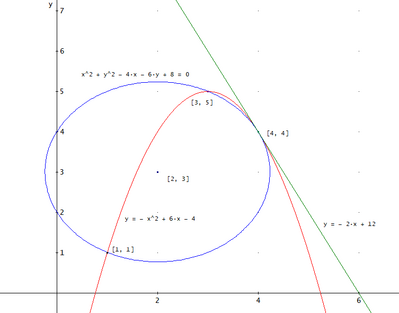
Il punto P della parabola per cui si ha:
√5 PQ + PR = 2
Si trova ponendo:
P [t, - t^2 + 6·t - 4]
la retta t: 2·x + y - 12 = 0
PQ = ABS(2·t + (- t^2 + 6·t - 4) - 12)/√(2^2 + 1^2)=
=√5·t^2/5 - 8·√5·t/5 + 16·√5/5
Quindi:
(√5·t^2/5 - 8·√5·t/5 + 16·√5/5)·√5 = t^2 - 8·t + 16
e risolvi:
t^2 - 8·t + 16 + ABS(- t^2 + 6·t - 4) = 2
ottenendo:
t = (√13 + 7)/2 ∨ t = 5
per tale valore si hanno due punti:
[(√13 + 7)/2, - (√13 - 3)/2]
[5, 1]

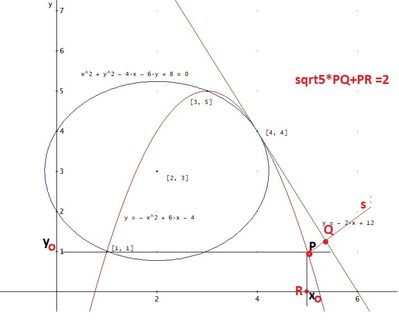
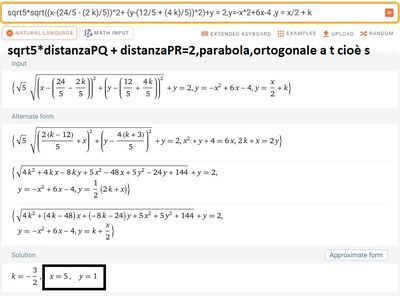
P[xo,yo]
PR ---> yo
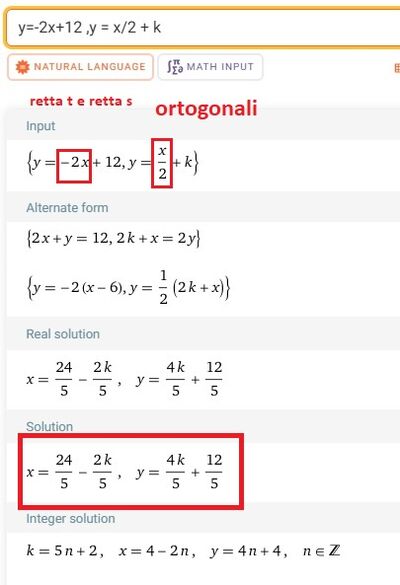
retta s che contiene PQ ---> y = x/2 + k ---> Q appartiene sia a t che a s---> sistema che determina x e y ( di Q!) in funzione di k.
Oltre che a soddisfare la condizione
sqrt5*PQ + PR = 2
P deve appartenere alla parabola ----> y = -x²+6x-4 e anche ad s.